
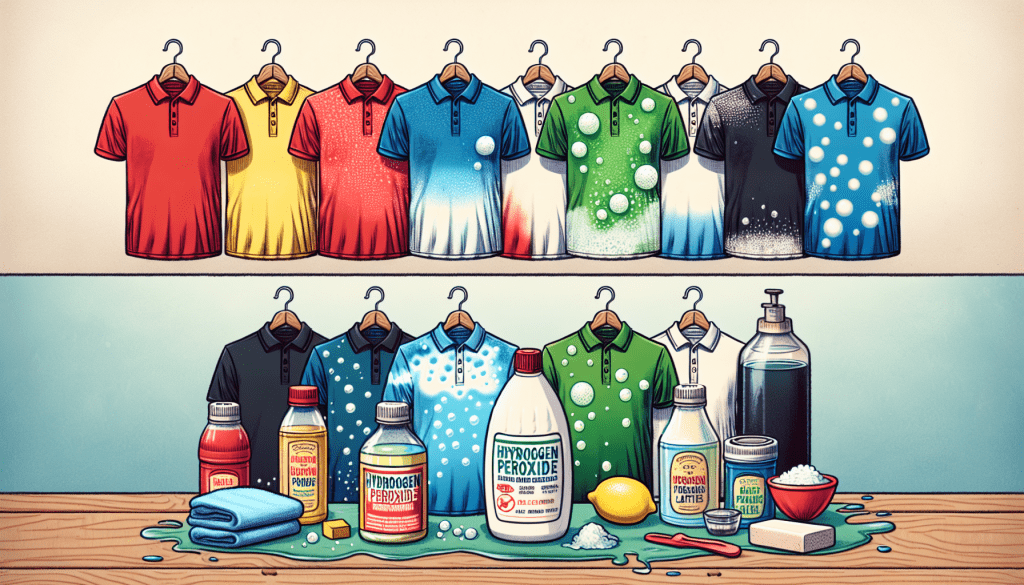
Stain removal, often an integral part of our routine laundry, can be a tricky task. It isn’t just about getting rid of the stain, but also making sure the fabric and its color remain undamaged. Astoundingly, a commonly used stain remover, hydrogen peroxide, can end up doing more harm than good, especially when used on colored clothes and sheets.
The pitfalls of using hydrogen peroxide on colored fabric
Why is hydrogen peroxide not recommended for colored fabric? It’s because hydrogen peroxide functions as a bleaching agent. While it might sound like the perfect element for stain removal, it bleaches colored textiles and can lead to faded areas on your clothes or sheets.
The role of hydrogen peroxide goes beyond stain removal. It is a highly reactive chemical that breaks down into water and oxygen when used – a helpful trait in some contexts, like wound cleaning. However, in the laundry, this same quality can lead to damage.
Alternative solutions for removing stains on colored fabric
Despite hydrogen peroxide not being suitable for colored fabric, this doesn’t mean that there aren’t any other effective stain removal options. Stain removal soaps, for instance, is a great alternative for colored textiles that doesn’t risk fading the material.
There are numerous eco-friendly and sustainable alternatives available, including a wide array of natural stain removers. These products not only provide an excellent cleaning performance but are also kind to the environment. For instance, baking soda mixed with water can be a potent stain remover while being eco-friendly.
Moreover, when exploring different stain removal strategies, always consider the fabric type, the longevity of the stain, and the colorfastness of the material. Make sure to read the care label on the clothing or textiles before you start the stain removal process. This practice assures that suitable cleaning methods are employed, thereby extending the life cycle of your textiles.
Without the use of a traditional ending, I would like to leave you with this final thought. Stain removal doesn’t have to be a harsh process that degrades your fabrics. By understanding the properties of our cleaning tools and choosing eco-friendly, sustainable options, we can effectively remove stains while keeping our fabrics vibrant and long-lasting. After all, the goal is to retain the beauty and longevity of our textiles while removing unwanted stains.

Emma Johnson is a passionate and insightful writer specializing in the house and garden niche, bringing over a decade of experience to her readers. At the youthful age of 34, Emma has already established herself as a leading voice in home improvement, landscaping, and interior design. Her journey began with a degree in Landscape Architecture from the University of Georgia, followed by years of hands-on experience working with renowned landscaping firms across the country.
Emma’s writing career took off when she started sharing her unique ideas and eco-friendly gardening tips on her personal blog. Her ability to blend practical advice with aesthetic design quickly garnered attention, leading to her current position as a featured columnist for a prominent online news site.
Dedicated to sustainable living and innovative design, Emma’s articles offer a wealth of knowledge, from DIY home projects to the latest trends in garden technology. Her work not only enlightens homeowners looking to enhance their living spaces but also inspires a deeper appreciation for the environment.
When she’s not writing or experimenting in her own garden, Emma enjoys mentoring young designers and participating in community beautification projects. Her contributions extend beyond her written work, embodying her commitment to making the world a more beautiful and sustainable place, one home at a time.


