
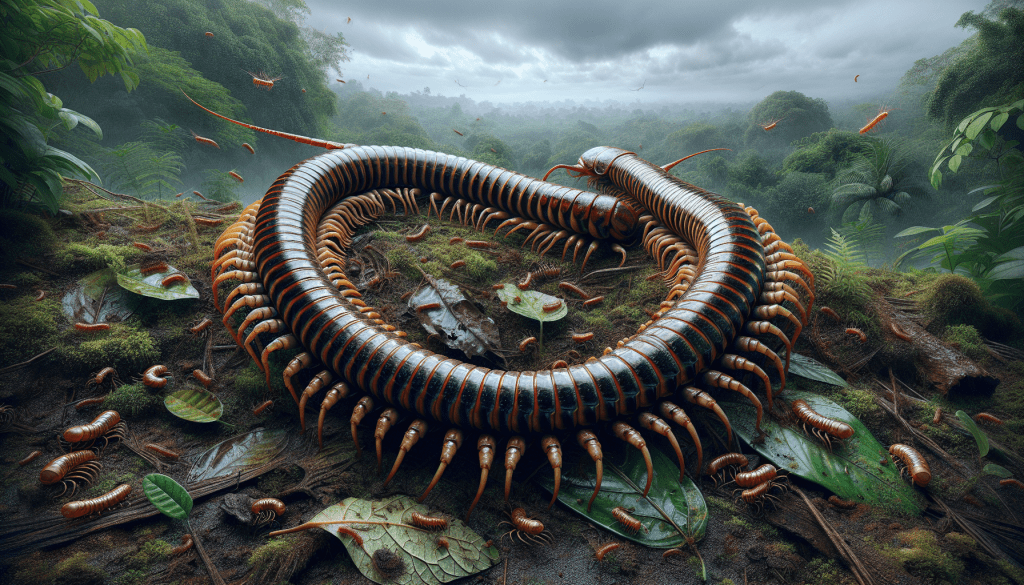
Unraveling the world of Scolopendres
Although sharing our homes with pets such as dogs or cats is quite common, there’s a whole realm of creatures we barely acknowledge unless we’re enthusiasts and animal lovers – this is the world of Scolopendres. Also known as the centipedes, these invertebrates may initially strike fear in some due to their appearance, but they serve crucial functions within our ecosystem.
It’s crucial to note that while they can be a fascinating subject of study, they are not suitable for everyone as pets. Handling them requires a certain understanding of their needs, characteristics, and behaviors. Nonetheless, these exceptional creatures can indeed contribute to a better understanding of bio-diversity.
The fascinating Scolopendre’s biology
The Scolopendre, or commonly referred to as the Giant Centipede, is a fascinating creature. They can grow up to 30 cm in length, making them one of the largest of their kind. They have a segmented body structure that gives them an elongated appearance, with each segment housing a pair of legs.
Understanding their biology is key to understanding their needs and behaviors. Equipped with venomous pincers, they are skillful hunters, essentially nocturnal creatures who feed primarily on insects, spiders, and small vertebrates. They are also known to be solitary creatures, only seeking out their kind during the mating season.
Understanding their ecological role
Centipedes, like the Scolopendre, play a significant role in biodiversity. They contribute significantly to the control of insect populations, thereby maintaining a balance in our natural ecosystems. Understanding this role helps shed light on their importance and why they should be respected and not feared.
Their place in our ecosystems
By helping control pest populations, the Scolopendre contributes to the well-being of our ecosystems. It’s a natural pest controller that aids in the maintenance of biodiversity.
Value in research and medicine
Interestingly, the venom of the Scolopendre is subject to various scientific studies. The naturally occurring compounds in their venom are considered promising in the search for new antibiotic agents, contributing to our progress in the field of medicine.
Caring for Scolopendres safely
While they aren’t typically considered pets, some enthusiasts do keep Scolopendres in controlled environments. If one wishes to co-habitate with these invertebrates, understanding their behavior, their needs, and the potential risks is essential.
They require specific environmental conditions to thrive, including temperature and humidity factors similar to their natural habitats. Manage their diet with care, remembering they are predators in nature.
However, one must never forget that these animals are venomous. Therefore, it is important to limit direct handling and always supervise any interaction with children or other pets.
Approaching Scolopendres with respect for their needs and their role in our ecosystems allows us to coexist with them in a positive manner. They have their part in the tapestry of Earth’s living creatures, and we can learn so much from their fascinating lives if we only take the time to look closer.
Respect for these creatures and their role in our natural ecosystems reflects our larger ideals of valuing all life. It’s not just about ownership or companionship, as we often frame our relationships with animals – it’s about looking beyond our own species and acknowledging the intricate web of life that we are but one thread in, and doing our part to preserve it. It’s about learning, understanding, and sharing that knowledge with the world.

Sophia Martinez is a dedicated and compassionate animal welfare advocate and writer, who has been enriching the lives of pet owners and animal enthusiasts for over 15 years. At 48 years old, Sophia’s expertise spans a wide range of topics, from pet care and nutrition to wildlife conservation and ethical animal treatment. She holds a Bachelor’s degree in Veterinary Science from Cornell University, which laid the foundation for her deep understanding of animal health and behavior.
Sophia’s career as a writer began after years of working in animal shelters and veterinary clinics, where she discovered her talent for communicating complex animal care concepts in an accessible and engaging manner. Her desire to make a difference in the lives of animals led her to become a prominent contributor to a well-known online news platform, where she now serves as the lead writer for the animal category.
Through her insightful and informative articles, Sophia aims to educate the public on responsible pet ownership, the importance of preserving natural habitats, and the latest advancements in animal health research. Her work not only highlights the joys and challenges of living with animals but also advocates for a more compassionate world where all creatures are respected and valued.
In addition to her writing, Sophia is an active volunteer with several non-profit organizations focused on animal rescue and habitat conservation. She often shares her personal experiences with fostering animals and participating in wildlife rehabilitation programs, further inspiring her readers to get involved in animal welfare causes.
Sophia’s passion for animals and her commitment to advocacy shine through in every piece she writes, making her a trusted and beloved figure among animal lovers worldwide.


