
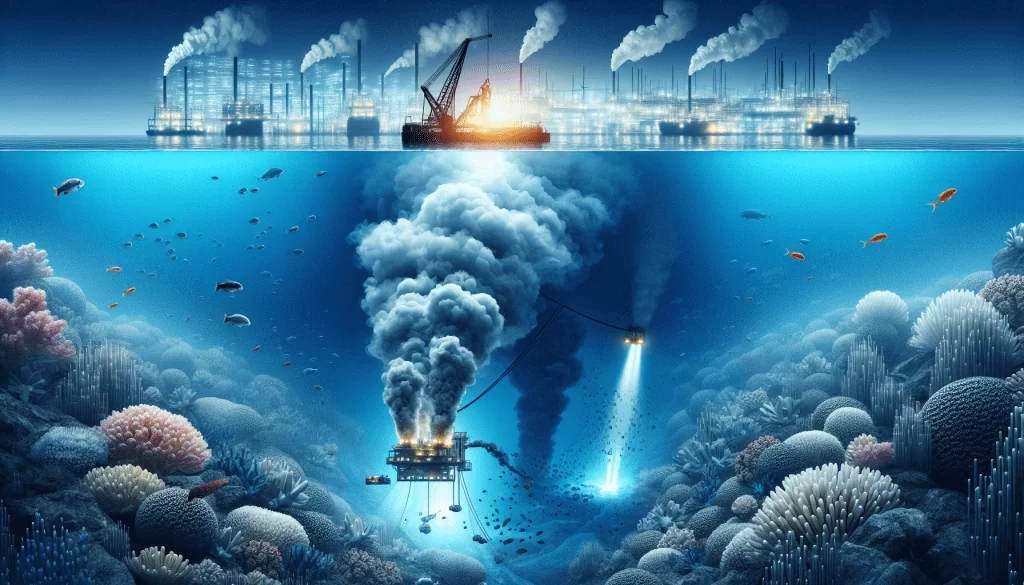
Underwater mining: a path to sustainable development or ecological crisis?
As the globe’s resources continue to decline, industries are exploring new frontiers to meet the world’s insatiable demand. One such frontier is the ocean depths, with underwater mining becoming an increasingly hot topic within both the scientific community and the industrial sector. The International Seabed Authority (ISA), a United Nations body, recently made headlines with its proposal to start regulated mining operations underwater.
The ISA’s push for underwater mining stems from a very real and pressing need: the demand for minerals crucial to modern technology, such as cobalt for electric car batteries and copper for renewable energy systems, is growing rapidly. However, the controversy arises when we consider the potential environmental impact of underwater mining. Environmentalists worry that regulations might not be enough to protect the delicate underwater ecosystems from harm.
The decision-maker: the International Seabed Authority
The ISA is in a unique position of power as the sole organization that can authorize companies to mine in international waters. Their regulation of this new industry could set precedents for how we approach resource extraction in less traditional environments.
On the one hand, the ISA’s willingness to consider underwater mining recognizes a crucial reality: that the demand for minerals required for technological advancements isn’t going anywhere. However, the ISA must consider these needs against the potential for damage to unique, barely-understood ecosystems that could have consequences we aren’t yet capable of fully comprehending.
What comes next: a balance between demand and protection
Moving forward, the ISA and its member states must strike the delicate balance between facilitating necessary resource extraction and preserving the ocean’s biodiversity. It’s the quandary of every new frontier: how much to explore and utilize, and at what cost to natural ecosystems?
The key players: industry, government and researchers
Industry needs for such minerals are clear: without them, our technological progress could stall. However, governments have a responsibility to stand as stewards for their nation’s natural resources and to protect the environment. Additionally, researchers must continue to investigate the effects of underwater mining and how to mitigate potential harm.
The dialogue surrounding underwater mining has just begun, and it promises to be a complicated one. With the tug-of-war between resource needs and environmental protection only becoming more entangled as time goes on, the decisions made now will have far-reaching implications.
As we grapple with these complex challenges, remember: while the rewards of this new frontier can be high, the potential costs must be acknowledged and appropriately managed. Only then can we craft a future that takes advantage of what the oceans have to offer, without robbing future generations of their riches.

James Walker is a business journalist with a knack for uncovering the stories behind the numbers and trends shaping the corporate world. At 43 years old, James brings a fresh perspective to business reporting, backed by a solid foundation with a Master’s degree in Business Administration from a well-respected business school. Before stepping into the realm of journalism, James cut his teeth in the finance sector, working as an analyst for a leading investment bank. This experience provided him with an insider’s view of the financial mechanisms driving businesses forward, as well as a critical eye for what makes a company thrive or dive.
As a key business writer for an esteemed online news outlet, James covers a broad spectrum of topics, from startup culture and innovation to in-depth analyses of global market trends. His articles are renowned for their clarity, offering readers a window into the complex world of business without the jargon. James has a particular interest in how technology is reshaping business practices and consumer behavior, a theme that recurs in much of his writing.
James’s approach to business journalism is rooted in the belief that behind every company’s story is a lesson about leadership, strategy, and resilience. Through interviews with business leaders and analyses of companies’ financial health, he seeks to provide his readers with actionable insights and foresight into future trends.
In addition to his written work, James is a regular contributor to business podcasts and webinars, where he discusses the implications of current business news and offers predictions for the future. His engaging delivery and depth of knowledge make him a sought-after commentator on business issues.
James’s commitment to demystifying the business world for his readers has made him an influential voice in business journalism. He not only informs but also inspires his audience to think critically about the forces shaping our economic landscape, making him a valuable resource for professionals and casual readers alike.


