
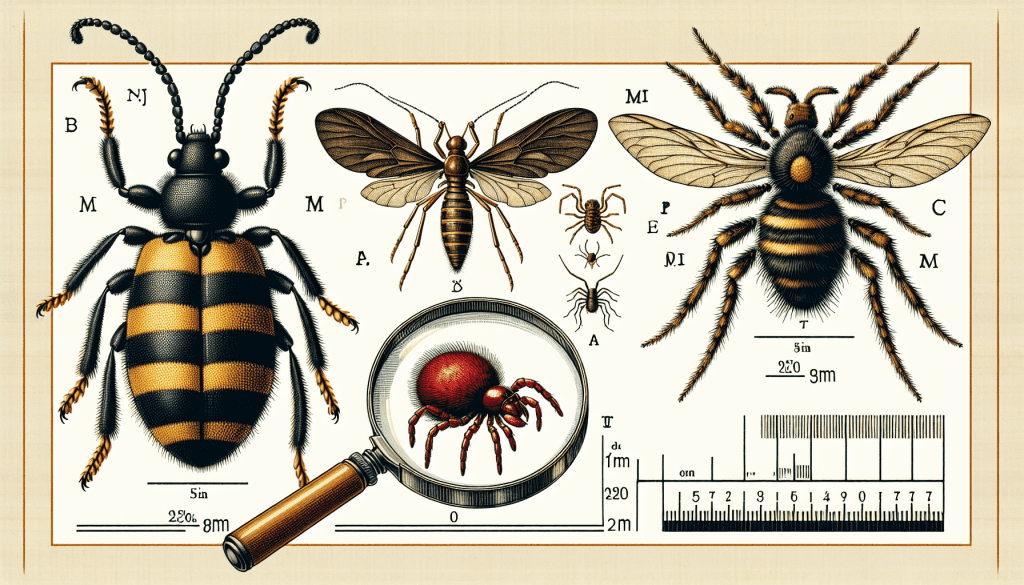
Welcome to your comprehensive guide on the differences between insects, mites, and spiders. It can be confusing to tell these tiny creatures apart, given their sizes and complex characteristics. Nonetheless, understanding their distinctions is crucial, especially to appreciate their unique roles in nature’s ecosystem. So, let’s dive into it.
Knowing your insects
Insects, belonging to the larger class Insecta, form the most diverse group of animals on our planet. These tiny creatures are characterized by a troika of three: three body parts and three pairs of legs. The body parts are usually defined— a head, a thorax (middle section), and an abdomen (back end). Bugs also are known for their pair of antennae, and in many cases, one or two pairs of wings.
From beetles and butterflies to bees and ants, insects are an integral part of our biodiversity. However, not all small crawling or flying creatures are insects. Spiders and mites, for example, belong to a completely different category.
Unveiling the world of spiders and mites
Spiders and mites are part of the class Arachnida, setting them apart from Insecta. Arachnids typically have four pairs of legs (unlike insects that have three), two body parts, and no antennae or wings. Instead of wings and antennae, spiders have pedipalps that they use for sensing their environment, similar to feelers.
Diving deeper into spiders
Spiders are perhaps the most recognizable group within the arachnids. They are famous for their eight legs, rounded abdomen, and unique ability to spin webs. Most species of spiders also have eight eyes. Contrary to popular belief, not all spiders spin webs and those that do, each spins a unique type of web. From the intricate orb webs to the minimalistic funnel webs, the diversity within spiders is truly remarkable.
Understanding mites and ticks
Mites and ticks form another notable group within the world of arachnids. The fascinating thing about mites and ticks is their size. Many mites are microscopic and live in diverse habitats, from aquatic environments to soil and plants, and even on other animals. Ticks, a type of large mite, are parasitic and known for feeding on blood.
Understanding these differences between insects, spiders, and mites play an essential role in appreciating nature’s vast biodiversity and can help us approach these creatures with a sense of awe and respect. While they might be small or even invisible to the naked eye, their impact on our ecosystem is undeniably large. Animals, irrespective of their size or the number of legs, all play critical roles in our planet’s functioning, and all deserve our respect and care.

Sophia Martinez is a dedicated and compassionate animal welfare advocate and writer, who has been enriching the lives of pet owners and animal enthusiasts for over 15 years. At 48 years old, Sophia’s expertise spans a wide range of topics, from pet care and nutrition to wildlife conservation and ethical animal treatment. She holds a Bachelor’s degree in Veterinary Science from Cornell University, which laid the foundation for her deep understanding of animal health and behavior.
Sophia’s career as a writer began after years of working in animal shelters and veterinary clinics, where she discovered her talent for communicating complex animal care concepts in an accessible and engaging manner. Her desire to make a difference in the lives of animals led her to become a prominent contributor to a well-known online news platform, where she now serves as the lead writer for the animal category.
Through her insightful and informative articles, Sophia aims to educate the public on responsible pet ownership, the importance of preserving natural habitats, and the latest advancements in animal health research. Her work not only highlights the joys and challenges of living with animals but also advocates for a more compassionate world where all creatures are respected and valued.
In addition to her writing, Sophia is an active volunteer with several non-profit organizations focused on animal rescue and habitat conservation. She often shares her personal experiences with fostering animals and participating in wildlife rehabilitation programs, further inspiring her readers to get involved in animal welfare causes.
Sophia’s passion for animals and her commitment to advocacy shine through in every piece she writes, making her a trusted and beloved figure among animal lovers worldwide.


