
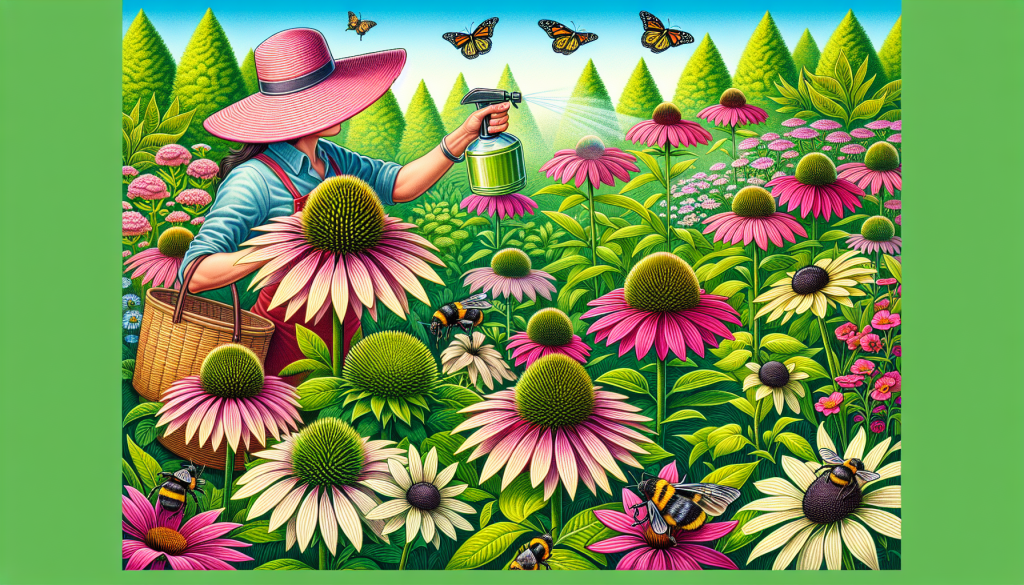
Few plants can brighten a garden with their simple beauty quite like a coneflower. Their fantastic explosion of color and vivacious vitality can transform gardens into an exciting kaleidoscope of beauty. However, like any garden inhabitants, they are not immune to various pests that can suddenly turn your coneflower heaven into a nightmare. In this article, we’ll focus on two of the most common pests found in a coneflower garden – Japanese Beetles and Black-Eyed Susans. Let’s arm ourselves with essential knowledge to fight these pests effectively and organically.
Journey into Japanese Beetles
Japanese Beetles are a distinctive-looking pest, notorious for their metallic green shells adorned with copper-colored wings. Found usually from early June to late July, these pests are capable of inflicting substantial damage to a coneflower garden.
The best defense against these relentless pests is knowing their lifecycle. They lay their eggs in the soil during the summer, which then emerge in the late spring next year. Prior knowledge of this cycle can equip gardeners with a strategic advantage against these invaders.
Innovative solution with beneficial nematodes
Beneficial nematodes can be a great biotechnical ally in your fight against Japanese Beetles. As a crime-fighting duo, they have an unquenchable hunger for beetle larvae. By releasing these microscopic creatures into your soil, you can effectively interrupt the Japanese Beetle lifecycle while maintaining an ecologically friendly garden.
Guarding against Black-Eyed Susan
Black-Eyed Susan, or Rudbeckia Hirta, though endearing in appearance with its bright yellow rays and dark central cones, can often take charge, treating your garden more like its dominion. They spread without an invitation and are resilient against many traditional deterrents, which can make them a significant concern for your coneflowers.
A sustainable way of control
Crowding can be a clever method to implement. By planting other taller, more dominant plants around your coneflowers, you can discourage the uninvited spread of Black-Eyed Susans. This method works on the principle of limiting the resources available to the Black-Eyed Susan, while adding a design element to your garden.
To conclude, as you gain understanding and experience about these two unwelcome guests, the Japanese Beetles and the Black-Eyed Susan, it’s important to remain mindful of the ecological impact of any pest control method employed. Solutions such as beneficial nematodes and strategic planting encourage a healthier, co-existing connection with the environment, enforcing the value of sustainability and innovation in gardening. Keep in mind that gardening is a journey, a resonance of life’s lessons, filled with trial and error, growth, and even the tiniest of victories. Embrace its challenges and nurture its rewards.

Emma Johnson is a passionate and insightful writer specializing in the house and garden niche, bringing over a decade of experience to her readers. At the youthful age of 34, Emma has already established herself as a leading voice in home improvement, landscaping, and interior design. Her journey began with a degree in Landscape Architecture from the University of Georgia, followed by years of hands-on experience working with renowned landscaping firms across the country.
Emma’s writing career took off when she started sharing her unique ideas and eco-friendly gardening tips on her personal blog. Her ability to blend practical advice with aesthetic design quickly garnered attention, leading to her current position as a featured columnist for a prominent online news site.
Dedicated to sustainable living and innovative design, Emma’s articles offer a wealth of knowledge, from DIY home projects to the latest trends in garden technology. Her work not only enlightens homeowners looking to enhance their living spaces but also inspires a deeper appreciation for the environment.
When she’s not writing or experimenting in her own garden, Emma enjoys mentoring young designers and participating in community beautification projects. Her contributions extend beyond her written work, embodying her commitment to making the world a more beautiful and sustainable place, one home at a time.


