
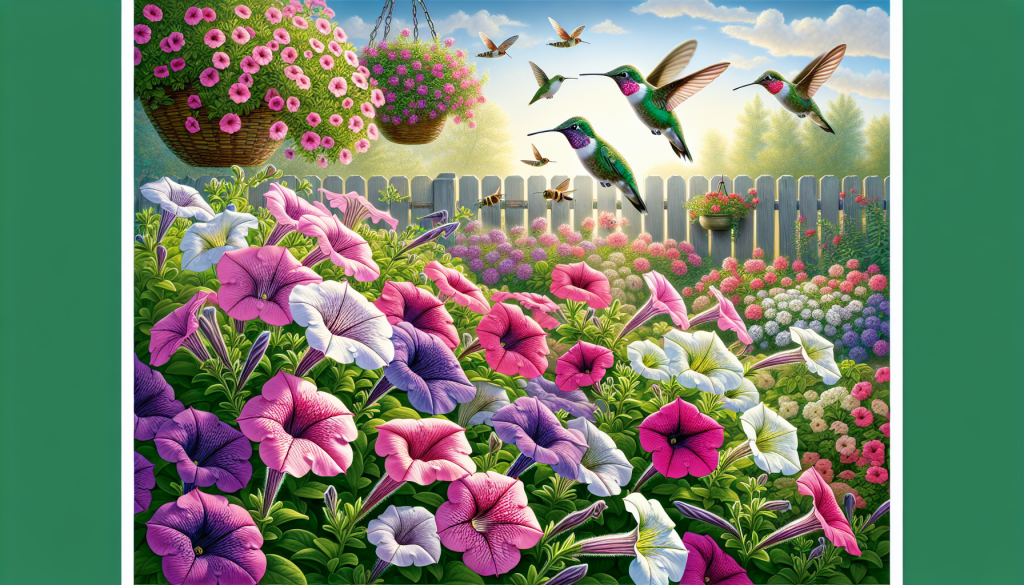
The allure of a garden teeming with life extends beyond the visual spectacle of vibrant colors and diverse textures of plants. It’s about fostering a bustling ecosystem in your backyard, that includes the buzzing of bees, the fluttering of butterflies, and the delightful sight of hummingbirds darting from flower to flower. One way to support these nectar-loving birds is by incorporating certain plants that attract them into your garden. Petunias, with their large, trumpet-shaped blossoms filled with sweet nectar, are one of the best choices when planning your hummingbird-friendly garden.
Why petunias are a hummingbird magnet
The secret behind petunias’ attraction to hummingbirds can be traced back to their shape and color. Hummingbirds have a particular fondness for tubular flowers, a shape common among petunia plants. The tube shape offers a perfect landing spot for these small birds, enabling them to feed on nectar with ease and comfort. Moreover, petunias come in a wide variety of bright colors – another big hummingbird attractor. In the wild, these high-energy birds are accustomed to sourcing nectar from vividly-colored plants, and petunias offer a similar allure.
Choosing and caring for your petunias
When it comes to including petunias in your garden layout, there are a few factors to consider for successful growth and to truly transform your garden into a hummingbird paradise. Start by choosing a location that receives ample sunlight, as petunias are sun-loving plants. Plant them in well-draining soil and avoid areas where water tends to pool.
Watering your petunias is quite straightforward – regular deep watering is essential, but avoid overwatering as it can lead to root rot. Fertilize your petunias every two weeks with a high-phosphorus formula to stimulate robust bloom growth, which in turn will create a veritable feast for your hummingbird visitors.
A case for eco-friendly garden practice
Mainstream fertilizers and pesticides can be harmful to the delicate ecosystems that thrive in and around our gardens. As gardeners, we can make a significant positive impact by switching to organic and eco-friendly products. Organic fertilizers nourish the soil, improving its health in the long term, and boost the growth and resilience of plants. Natural pest control methods, like companion planting or DIY insecticidal sprays, help to maintain the balance of beneficial insects in the garden without harming birds or other wildlife.
Harmonizing aesthetics and ecology
Planning a garden is as much about personal enjoyment as it is about contributing to local ecosystems. When selecting plants for your hummingbird garden, consider their aesthetic value and ecological importance. Choosing native plants that support local pollinators not only contributes to biodiversity, but also provides an opportunity to create a garden that resonates with the surrounding environment and fits seamlessly into the local ecosystem.
The intentional act of attracting hummingbirds with petunias and other hummingbird-friendly plants is a simple and effective strategy to enhance local biodiversity, and it offers a unique opportunity to witness these stunning creatures up close. Through mindful gardening practices, we can enjoy the beauty of our gardens while supporting the environment and contributing positively to local wildlife.
Experience the joy of seeing hummingbirds dancing in your garden. Set up your flower pots, sow your petunia seeds, and watch as your garden pulsates with the vibrant energy of these winged visitors. It’s an adventure worth embarking on, a testament to the fulfillment derived from creating a sustainable ecosystem right in your backyard.

Emma Johnson is a passionate and insightful writer specializing in the house and garden niche, bringing over a decade of experience to her readers. At the youthful age of 34, Emma has already established herself as a leading voice in home improvement, landscaping, and interior design. Her journey began with a degree in Landscape Architecture from the University of Georgia, followed by years of hands-on experience working with renowned landscaping firms across the country.
Emma’s writing career took off when she started sharing her unique ideas and eco-friendly gardening tips on her personal blog. Her ability to blend practical advice with aesthetic design quickly garnered attention, leading to her current position as a featured columnist for a prominent online news site.
Dedicated to sustainable living and innovative design, Emma’s articles offer a wealth of knowledge, from DIY home projects to the latest trends in garden technology. Her work not only enlightens homeowners looking to enhance their living spaces but also inspires a deeper appreciation for the environment.
When she’s not writing or experimenting in her own garden, Emma enjoys mentoring young designers and participating in community beautification projects. Her contributions extend beyond her written work, embodying her commitment to making the world a more beautiful and sustainable place, one home at a time.


