
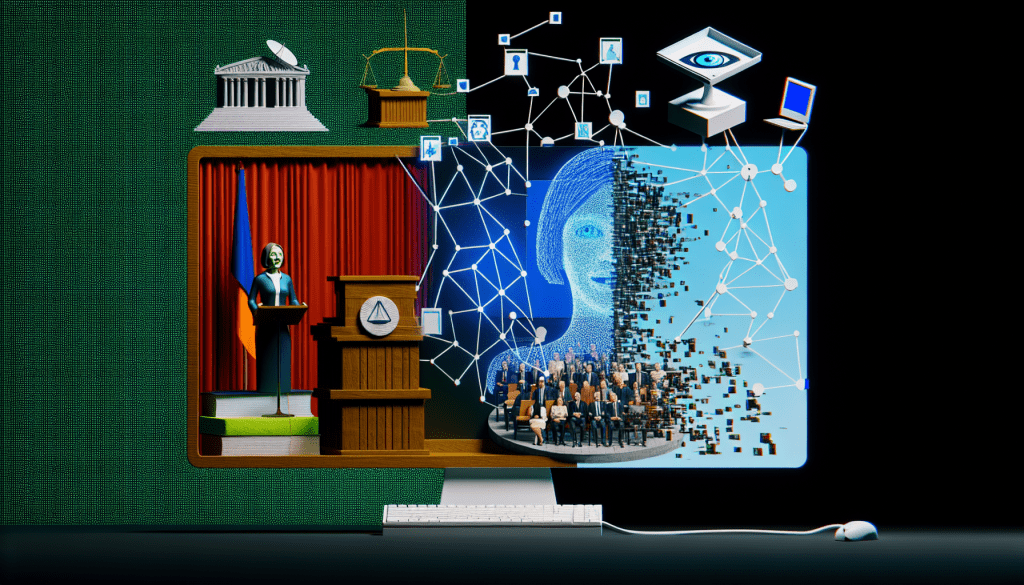
Deepfakes, or manipulated videos, have been making headlines for their potential to disrupt various sectors. But there’s one area that seems particularly vulnerable to their influence — the political sphere. As technology advances, the use of deepfakes in political campaigns, and their potential to undermine institutional credibility, is a growing concern.
The rise of deepfakes in politics
Deepfakes leverage artificial intelligence and machine learning to produce or alter video content to present something that didn’t occur in reality. In the wrong hands, this technology can be used to spread disinformation and manipulate public opinion. These manipulated videos may look highly convincing to the untrained eye, increasing their potential for damage.
In the political realm, deepfake videos can be used for nefarious purposes such as character assassination, false accusations, or misrepresentation of a candidate’s views. The most alarming part is how difficult it is to distinguish a deepfake from an authentic video, making it an incredibly insidious tool.
Case studies: deepfakes in recent elections
Recent elections around the world have already felt the impacts of this disruptive technology. For instance, the use of deepfakes has been reported in political campaigns where candidates are shown expressing views or performing actions they never did. This use of technology to spread false information can undermine public trust in political institutions, further polarizing societies.
Addressing the deepfake problem
The rising use of deepfakes in politics highlights a critical need for technology solutions that can detect and counteract these videos. Ensuring that the public can discern between real and manipulated content is a crucial step in protecting the integrity of political institutions. Several tech companies are already developing algorithms and techniques aimed at identifying deepfakes, but it’s an ongoing battle that requires continuous innovation and vigilance.
Legal and regulatory measures
Beyond technology, there’s also a growing call for legal and regulatory measures to deter malicious use of deepfakes. These could include laws that criminalize the creation or distribution of deepfakes intended to deceive or harm. However, legislating this new frontier poses its own challenges, as lawmakers must strike a delicate balance between controlling misuse and preserving freedom of expression and innovation.
Looking ahead, the fight against deepfakes is set to be a multi-front battle, including technological, legal, and educational measures. Public awareness campaigns, teaching people to question and verify the content they consume, can also play an essential role in mitigating the risks associated with deepfakes in politics.
Deepfakes pose an immense challenge to the political landscape, threatening to shake the very foundations of institutional credibility. It’s a warning sign that, in this digital age, we need to be ever more cautious and discerning about the content we consume. In the face of this threat, we must harness the same technology that enables it to develop robust defense mechanisms. And, as we grapple with the legal and ethical implications of deepfakes, we can’t afford to lose sight of the overarching goal: preserving trust, integrity and truth in our political discourse and institutions.

Liam Nguyen is a tech enthusiast and writer with a genuine passion for all things related to technology and the web. At the age of 32, Liam has already carved out a niche for himself as a go-to source for insights on emerging tech trends, gadget reviews, and practical advice for navigating the digital age. With a Bachelor’s degree in Computer Science from a well-known tech university, Liam combines his technical expertise with a clear, accessible writing style.
Starting his career as a software developer, Liam quickly realized that his true calling was in demystifying technology for the masses. He transitioned to tech journalism, where he now serves as a contributor to a popular online technology news platform. In his articles, Liam covers a broad spectrum of topics, from the latest smartphone releases to in-depth guides on cybersecurity, aiming to keep his readers informed and ahead of the curve.
Liam’s approach to writing is grounded in the belief that technology should empower and connect people. He has a particular interest in open-source projects and the democratization of technology, themes that frequently appear in his work. Liam’s ability to explain complex technical concepts in an engaging and straightforward manner has endeared him to a diverse audience, from tech aficionados to novices looking to get the most out of their devices.
Aside from his written work, Liam is active in online tech communities, participating in forums and social media discussions. He’s also been known to guest lecture at his alma mater, sharing his journey and inspiring the next generation of tech enthusiasts.
Liam’s dedication to the tech community and his knack for clear communication make him an influential voice in the tech and web category, always eager to explore how technology can make our lives better and more connected.


