
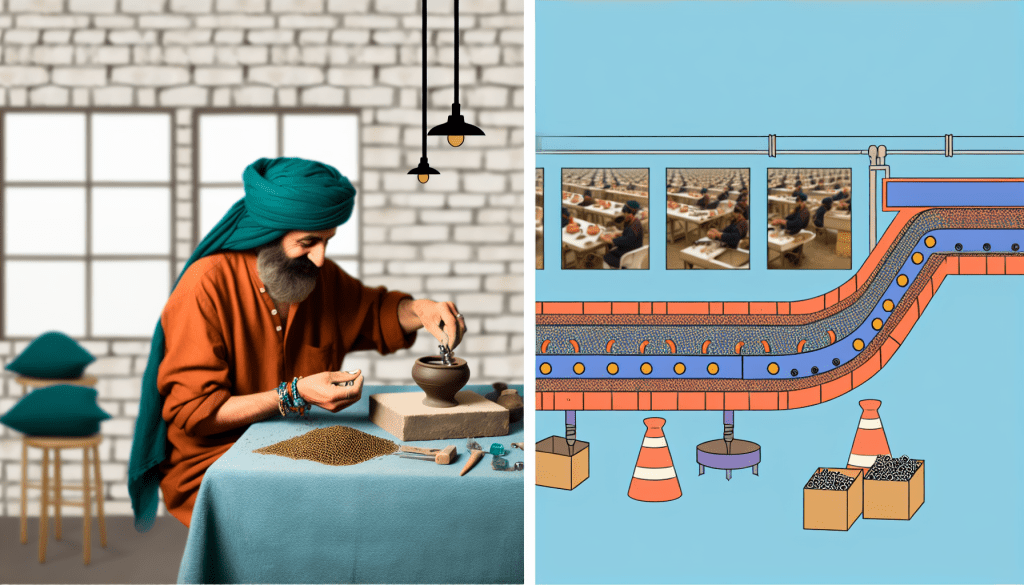
Recently, the online marketplace Etsy has made headlines with its strategic shift back to its roots as a platform for selling handmade, artisan goods. This signifies an important divergence in a digital landscape where the mantra often seems to be ‘bigger, faster, cheaper’. Instead, Etsy is choosing to focus on quality and craftsmanship. Let’s delve into this interesting shift.
Etsy’s return to its artisan roots
Known for connecting buyers and sellers in a vast, digital marketplace, Etsy has become a symbol of the gig economy. But over time, the platform had begun to veer away from its mission to support mainly handcrafters and small businesses. Increasingly, Etsy was becoming an arena where mass-produced goods were encroaching on the market share of the handmade items it built its reputation upon. Today, though, Etsy seems to be reversing that trend and returning to its roots.
The benefits of this shift
The decision to re-embrace their artisanal roots is a beneficial move for Etsy. This approach caters to a niche market whose demands often go unserved by the larger e-commerce giants like Amazon. Customers who value quality handmade items, unique finds, and personalized experiences can once again turn to Etsy as their go-to platform.
Stepping away from the ‘race to the bottom’
Etsy’s decision to switch gears also signals a stepping away from what is often termed the ‘race to the bottom’ – a scenario where companies compete mainly on price, often at the expense of quality and labour standards. Etsy choosing to focus on its artisan roots represents a conscious shift towards promoting quality and craftsmanship over mere cost considerations.
The importance of sustainable business practices
In this new direction, Etsy is also demonstrating the value of adopting sustainable business practices. By supporting micro-entrepreneurs and artisanal craftspeople, they contribute to the emergence of a more organic, capable, and sustainable gig economy. Furthermore, this move has the potential to encourage more platforms to follow suit, finding success not just in economies of scale, but also in the cultivation and support of small businesses and quality crafted products.
Indeed, Etsy’s strategic decision to shift back to its artisan roots comes as a breath of fresh air in today’s market, dominated by aggressive pricing and mass production. By fostering a community of crafters, valuing quality over quantity and offering unique, handmade products, Etsy is setting an exciting precedence — not only within the platform economy but for the broader digital age as well. It underscores that technology can thrive while still maintaining a human touch and the important role that eCommerce platforms can play in supporting local, quality-focused businesses.
As we watch Etsy’s journey unfold, it serves as a powerful reminder that technological advancement need not come at the cost of human creativity and craftsmanship. Instead, platforms like Etsy can harness the power of technology to create thriving, sustainable spaces where artisans can flourish. This shift back to their roots significantly elevates the conversation about the role of technology and the platforms within our everyday transactions — pushing us to expect more, to demand better, and to appreciate the value of the crafted, the curated, and the creatively unique.

Liam Nguyen is a tech enthusiast and writer with a genuine passion for all things related to technology and the web. At the age of 32, Liam has already carved out a niche for himself as a go-to source for insights on emerging tech trends, gadget reviews, and practical advice for navigating the digital age. With a Bachelor’s degree in Computer Science from a well-known tech university, Liam combines his technical expertise with a clear, accessible writing style.
Starting his career as a software developer, Liam quickly realized that his true calling was in demystifying technology for the masses. He transitioned to tech journalism, where he now serves as a contributor to a popular online technology news platform. In his articles, Liam covers a broad spectrum of topics, from the latest smartphone releases to in-depth guides on cybersecurity, aiming to keep his readers informed and ahead of the curve.
Liam’s approach to writing is grounded in the belief that technology should empower and connect people. He has a particular interest in open-source projects and the democratization of technology, themes that frequently appear in his work. Liam’s ability to explain complex technical concepts in an engaging and straightforward manner has endeared him to a diverse audience, from tech aficionados to novices looking to get the most out of their devices.
Aside from his written work, Liam is active in online tech communities, participating in forums and social media discussions. He’s also been known to guest lecture at his alma mater, sharing his journey and inspiring the next generation of tech enthusiasts.
Liam’s dedication to the tech community and his knack for clear communication make him an influential voice in the tech and web category, always eager to explore how technology can make our lives better and more connected.


