
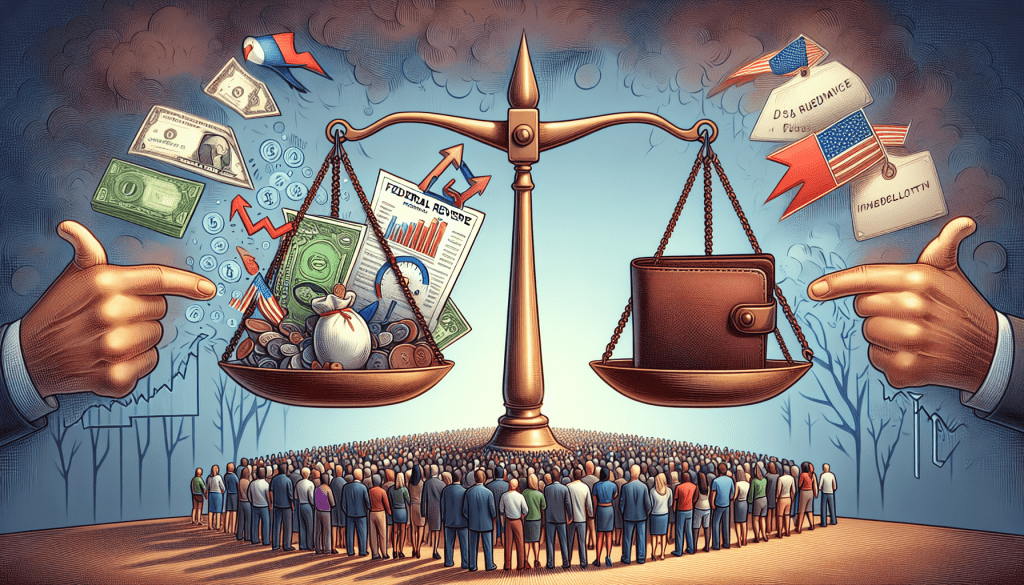
The U.S. Federal Reserve has made another big move recently that has major implications on credit units like mortgages and credit cards. This raises the question: how exactly does this affect an average American’s pocketbook?
Understanding the Fed’s decisions
The Federal Reserve, often simply called the Fed, has the power to influence economies in massive ways. One of the methods it uses is changing the federal funds rate, which is the interest rate at which banks lend money to each other. The recent alteration in this rate has a rippling effect that reaches ordinary Americans and their finances.
In simple terms, when the Fed raises its rates, banks and other financial institutions typically follow suit. This increase trickles down to affect various credit units, including mortgages, credit cards and loans. The inverse happens when the Fed lowers its rates, with banks generally lowering their interest rates as well.
Implications of the increased rates
With the Fed’s recent announcement of increased rates, people with variable-rate credit products are likely to feel the impact first. Homeowners with adjustable-rate mortgages or individuals with credit card debt will see their interest rates rise. This means they’ll need to pay more on top of what they borrowed.
Similarly, if you’re planning to take out a new car loan, the cost could be higher than before due to the increased rates. For those with fixed-rate credit products, however, the impact will not be immediate since their interest rates don’t immediately change with the Fed’s adjustments.
How can consumers navigate this?
As a consumer, there are a few things you can do to navigate this financial turn. Those with credit card debt, for instance, might want to look into moving their balance to a card with a lower rate. If this isn’t possible, making more than minimum payments can help mitigate the added interest costs.
If you’re considering a new mortgage or refinancing an existing one, you’ll need to weigh carefully the benefits and drawbacks of fixed and adjustable rates. Fixed-rate mortgages could save you money if you think interest rates will increase even more in the future.
Even with these higher costs, the increase in federal rates isn’t entirely bad news. On the positive side, savers might see a slight increase in their return rates. This could provide just the incentive needed to save more.
The shifting landscape of the financial sector, spurred by the Fed’s decision, underscores the intricate dance of economic forces that continually shape our financial behavior. With the right knowledge and actions, consumers can arm themselves to navigate these changes in the most beneficial way possible. It also reminds us that understanding the implications of these changes is crucial as we strive to make informed financial decisions. Change is inevitable, but confusion doesn’t have to be.

James Walker is a business journalist with a knack for uncovering the stories behind the numbers and trends shaping the corporate world. At 43 years old, James brings a fresh perspective to business reporting, backed by a solid foundation with a Master’s degree in Business Administration from a well-respected business school. Before stepping into the realm of journalism, James cut his teeth in the finance sector, working as an analyst for a leading investment bank. This experience provided him with an insider’s view of the financial mechanisms driving businesses forward, as well as a critical eye for what makes a company thrive or dive.
As a key business writer for an esteemed online news outlet, James covers a broad spectrum of topics, from startup culture and innovation to in-depth analyses of global market trends. His articles are renowned for their clarity, offering readers a window into the complex world of business without the jargon. James has a particular interest in how technology is reshaping business practices and consumer behavior, a theme that recurs in much of his writing.
James’s approach to business journalism is rooted in the belief that behind every company’s story is a lesson about leadership, strategy, and resilience. Through interviews with business leaders and analyses of companies’ financial health, he seeks to provide his readers with actionable insights and foresight into future trends.
In addition to his written work, James is a regular contributor to business podcasts and webinars, where he discusses the implications of current business news and offers predictions for the future. His engaging delivery and depth of knowledge make him a sought-after commentator on business issues.
James’s commitment to demystifying the business world for his readers has made him an influential voice in business journalism. He not only informs but also inspires his audience to think critically about the forces shaping our economic landscape, making him a valuable resource for professionals and casual readers alike.


