
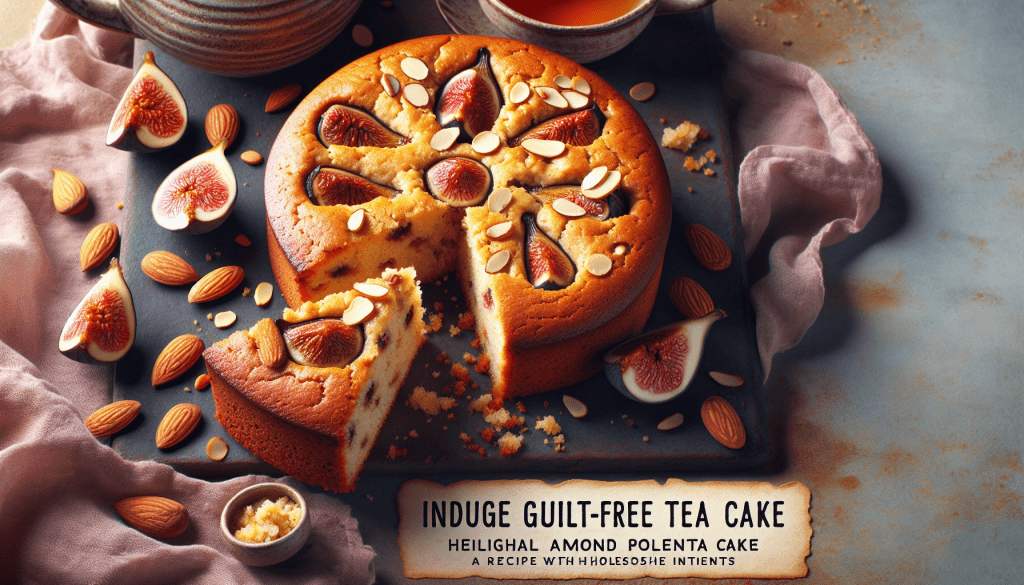
If there’s one thing that’s certain, it’s our collective love for cakes. Despite this shared fondness, finding a recipe that balances the indulgence of a cake and the healthiness of wholesome ingredients can be quite the challenge. That’s where the Figgy Almond Polenta Tea Cake stands out, a succulent and sumptuous treat that you can enjoy without feeling the guilt or the unnecessary heaviness that generally comes after consuming rich desserts.
The allure of the figgy almond polenta tea cake
Initially, what draws you in is the distinct and dignified look of the figgy almond polenta tea cake. With a golden-brown facade that belies an incredibly soft and moist inside, it sets an intriguing balance between a refined aesthetic and a homely comfort. But it doesn’t just end here. Each edge and corner holds a crunch, adding an exciting dimensional contrast to the soft, delicate center.
When baked correctly, the figs on this cake become caramelized and syrupy, rendering an extravagant sweetness that can only be described as heavenly. Adding the syrupy sweetness of the figs to the nutty goodness of almond, and the fluffiness of polenta makes a delightfully satisfying combination. The fact that this cake uses polenta instead of the common flour gives it a unique, grainy texture, which feels surprisingly pleasant in the mouth.
How sustainable is this recipe?
Besides the extraordinary flavor incorporation, what makes this recipe even more appealing to the health-conscious lot is that it utilizes simple and easily available ingredients. Figs, for instance, are a potent source of dietary fiber which aid digestive health. They’re also rich in antioxidants and essential minerals like magnesium, calcium, and potassium.
Almond is another primary ingredient of this cake, which is known for its high content of healthy fats, fiber, protein, and several vital nutrients. It’s a universally acknowledged fact that almonds are one of the world’s best sources of vitamin E, which is key for maintaining healthy skin and eyes, as well as a strong immune system.
The use of polenta, a cornmeal, presents a fantastic gluten-free alternative to the more traditionally used wheat flour, making the figgy almond polenta tea cake an excellent option for those with gluten sensitivities.
Switching to more sustainable eating practices doesn’t mean you have to compromise on the taste. This delicious recipe is a testament to that fact. Have we not been told time and again that the best foods are often the simplest ones?
Ultimately, the figgy almond polenta tea cake isn’t just something that you bake and forget; instead, the preparatory process becomes a ritual each time. Measuring the dry ingredients, the rhythm of the timer ticking away, the blend of homely smells wafting through the kitchen, and finally, that breathtaking sight of the golden-brown cake slowly rising from the pan; the entire process is therapeutic, to say the least.
So, why treat yourself to just a slice when you can savor the entire journey of making one? Each bite of the figgy almond polenta tea cake, each crumb, promises a wholesome, healthy, and enjoyable experience.

Kate Robinson is a culinary writer and food critic with a deep passion for gastronomy and a keen palate that appreciates flavors from around the world. At 31 years old, Kate’s background is as rich and diverse as her taste in food. Holding a Bachelor’s degree in Culinary Arts from the Culinary Institute of America, she has worked in various roles within the food industry, from a line cook in bustling New York City restaurants to a food stylist for culinary magazines.
Her transition into writing was driven by a desire to share her love for food and cooking with a wider audience. Now, as a prominent contributor to a leading online food and gastronomy news platform, Kate explores a wide array of topics, including restaurant reviews, recipe development, and the latest trends in food and dining.
Kate’s writing is distinguished by her ability to transport readers to the heart of the dining experience, whether she’s describing the subtle notes of a rare wine or the vibrant atmosphere of a street food market in Southeast Asia. Her reviews are honest and insightful, offering readers a comprehensive guide to the world’s culinary delights.
Beyond reviews, Kate is passionate about sustainable eating practices and often features articles on farm-to-table dining, organic farming, and ethical food sourcing. Her features on international cuisines and culinary traditions aim not only to educate her audience but also to inspire them to explore new flavors and cooking techniques.
Kate’s engaging writing style, combined with her extensive knowledge of the culinary world, has made her a favorite among food lovers. Whether her readers are experienced chefs or home cooks looking to broaden their culinary horizons, Kate provides valuable insights and inspiration to elevate their food experiences.
In addition to her writing, Kate regularly hosts online cooking classes and workshops, where she shares her expertise and enthusiasm for cooking with participants eager to learn. Her commitment to exploring and celebrating the world of food has established her as a respected voice in the gastronomy category, inspiring a deeper appreciation for the art and culture of food.


