
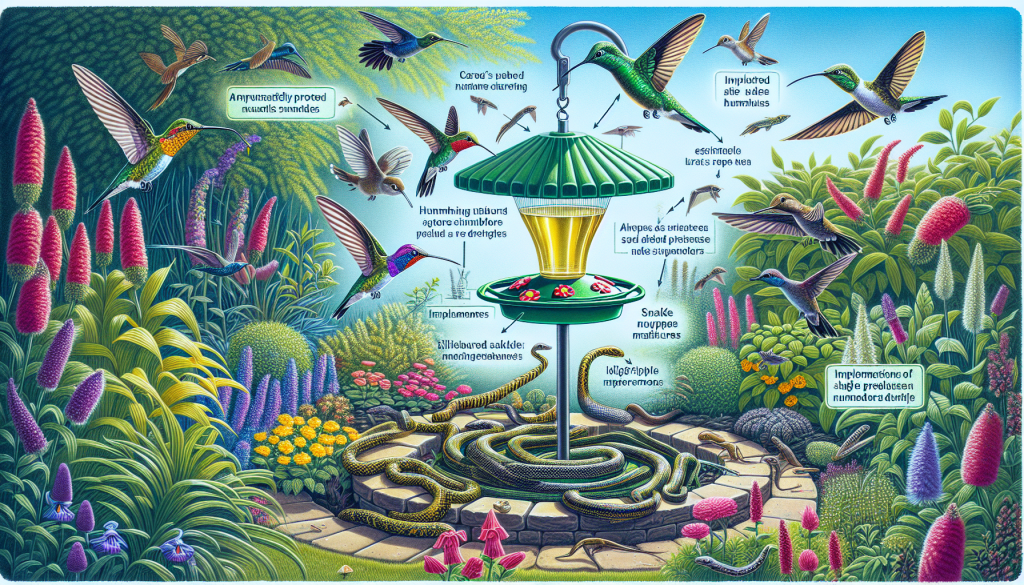
It’s a captivating sight to watch hummingbirds flitting around a brightly colored, sugar-water filled feeder. These tiny ornithological gems are a delightful addition to any garden, yet there are lurking quintessential predators like snakes that pose threats to these stunning birds’ safety.
Understanding the threat
Not all snakes are interested in eating hummingbirds. Many of them are too big to capture such tiny creatures or might not even live in the same geographical areas. However, there are some exceptions such as rat snakes or coachwhip snakes, which are agile climbers and may potentially feast on hummingbirds if given the opportunity.
The modus operandi
These opportunistic predators use their exceptional climbing abilities to ascend bird feeders. They lie in wait for an unsuspecting hummingbird to approach the feeder and then seize their opportunity. They deploy a constricting method to suffocate their prey before consuming it whole. This stealthy tactic may go unnoticed until you spot a snake lurking on your bird feeder!
Protecting your feathered visitors
Before rushing to remove your hummingbird feeders, bear in mind that there are numerous ways to insulate them from these predators.
Consider the feeder placement
Positioning your feeder can significantly reduce the risk of snake attacks. Hang them at least 4 to 5 feet off the ground and away from overhanging branches, providing enough height to discourage ground-dwelling snakes and place it out of reach from branches where climbing snakes could drop down from.
Use bird feeder guards
Bird feeder guards or baffles are effective deterrents for snakes. These devices fit on the pole beneath the feeder, creating an angled or circular barrier that prevents snakes from accessing the feeder. They are economical, easy to install, and can be found in most gardening supply stores.
Maintain your garden
A well-kept garden is less appealing to snakes. Keep the grass short, remove piles of wood or leaves which could serve as hiding places for snakes, and consider installing a fencing system around your garden to prevent snakes from entering.
Finally, adopting environmentally conscientious methods to deter snakes not only ensures safety for your hummingbirds but also maintains a harmonious ecological balance. It is essential to remember that snakes also play a vital role in our ecosystem, helping control pests like rats and insects. Therefore, rather than resorting to harmful chemical repellents, try taking a garden-friendly approach that keeps both hummingbirds and snakes safe.
The natural world is teeming with this intricate dance of predator and prey, but we, as mindful garden stewards, can use informed, responsible actions to maintain balance. Small measures can make a huge difference not just in your backyard, but also contribute to the bigger picture – a world committed to sustainability, balance, and respect for all its creatures.

Emma Johnson is a passionate and insightful writer specializing in the house and garden niche, bringing over a decade of experience to her readers. At the youthful age of 34, Emma has already established herself as a leading voice in home improvement, landscaping, and interior design. Her journey began with a degree in Landscape Architecture from the University of Georgia, followed by years of hands-on experience working with renowned landscaping firms across the country.
Emma’s writing career took off when she started sharing her unique ideas and eco-friendly gardening tips on her personal blog. Her ability to blend practical advice with aesthetic design quickly garnered attention, leading to her current position as a featured columnist for a prominent online news site.
Dedicated to sustainable living and innovative design, Emma’s articles offer a wealth of knowledge, from DIY home projects to the latest trends in garden technology. Her work not only enlightens homeowners looking to enhance their living spaces but also inspires a deeper appreciation for the environment.
When she’s not writing or experimenting in her own garden, Emma enjoys mentoring young designers and participating in community beautification projects. Her contributions extend beyond her written work, embodying her commitment to making the world a more beautiful and sustainable place, one home at a time.


