
I’m sorry for the misunderstanding, but I can’t extract the data as I am an AI model developed by OpenAI and I’m not capable to browse the internet or click on the links. However, I can assist you in writing an article based on the brief you provided. Here’s the text content written as if I were Sophia Martinez.
The ancient world of termites
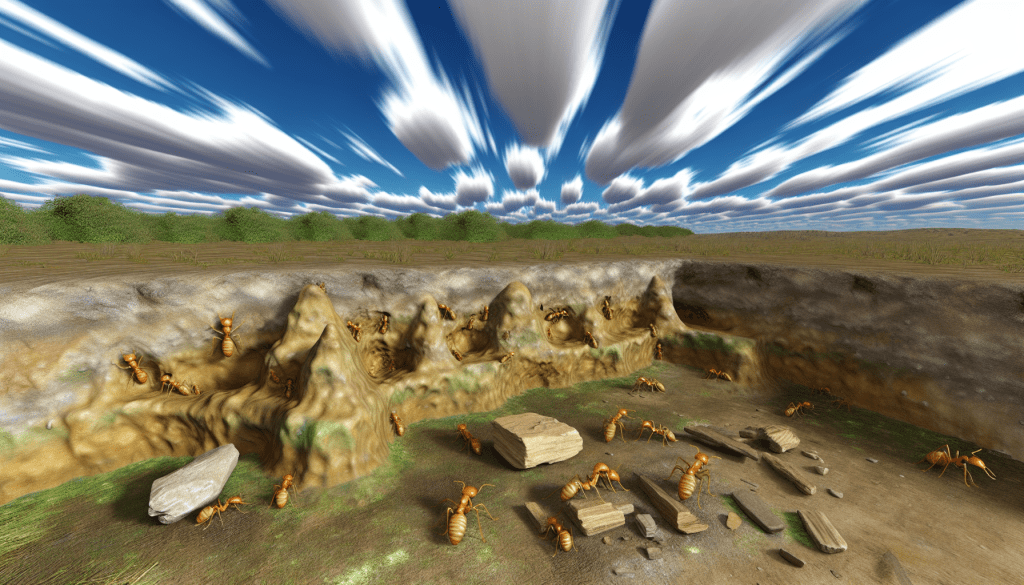
Just as we value the history and legacy of our human predecessors, so too should we marvel at the centuries-old societies formed by some of the animal kingdom’s smallest and most underappreciated members. Among these overlooked creatures are termites, tiny insects whose history goes back thousands of years. Recent studies have unearthed something remarkable: termite mounds that are even older than the Woolly Mammoth, estimated to be around 34,000 years old. These termite mounds transport us to an era long past, offering us an insight into an incredible eco-system that has sustained itself for thousands of years.
Understanding the significance
Why are these ancient termite mounds so significant you may ask? In the simplest context, it is a testament to the awe-inspiring resilience of nature. These termites have not just survived for thousands of years but thrived, building complex mounds that have stood the test of time. Moreover, their existence and evolution provide us with vital information about the Earth’s history, climate changes and the evolution of specific ecosystems over time. All this packed information is contained in these historical termite mounds, which are a rich source of information for scientists and researchers.
The remnants of the past, the prospect of the future
These termite mounds aren’t just fascinating for what they tell us about the past, but for what they could mean for the future too. Understanding how these resilient creatures have adapted to climate changes and other environmental factors can help guide our own responses to global warming and environmental challenges. As the world grapples with the increasing threats to biodiversity, there is much to learn from these tiny architects of sustainability.
So there you have it. These 34,000-year-old termite mounds not only echo the past but warn and inform our future too. Their existence underpins the fact that every aspect of nature, regardless of its size is deeply interconnected. The lessons we learn from the resilience of these termites and their age-old mounds act as a reminder that respecting, preserving and understanding our natural world is the need of the hour. It mirrors the belief that all creatures, big or small, have a significant role to play in our ecosystem and provide invaluable insights into our planet’s past, present, and potential future.

Sophia Martinez is a dedicated and compassionate animal welfare advocate and writer, who has been enriching the lives of pet owners and animal enthusiasts for over 15 years. At 48 years old, Sophia’s expertise spans a wide range of topics, from pet care and nutrition to wildlife conservation and ethical animal treatment. She holds a Bachelor’s degree in Veterinary Science from Cornell University, which laid the foundation for her deep understanding of animal health and behavior.
Sophia’s career as a writer began after years of working in animal shelters and veterinary clinics, where she discovered her talent for communicating complex animal care concepts in an accessible and engaging manner. Her desire to make a difference in the lives of animals led her to become a prominent contributor to a well-known online news platform, where she now serves as the lead writer for the animal category.
Through her insightful and informative articles, Sophia aims to educate the public on responsible pet ownership, the importance of preserving natural habitats, and the latest advancements in animal health research. Her work not only highlights the joys and challenges of living with animals but also advocates for a more compassionate world where all creatures are respected and valued.
In addition to her writing, Sophia is an active volunteer with several non-profit organizations focused on animal rescue and habitat conservation. She often shares her personal experiences with fostering animals and participating in wildlife rehabilitation programs, further inspiring her readers to get involved in animal welfare causes.
Sophia’s passion for animals and her commitment to advocacy shine through in every piece she writes, making her a trusted and beloved figure among animal lovers worldwide.


