
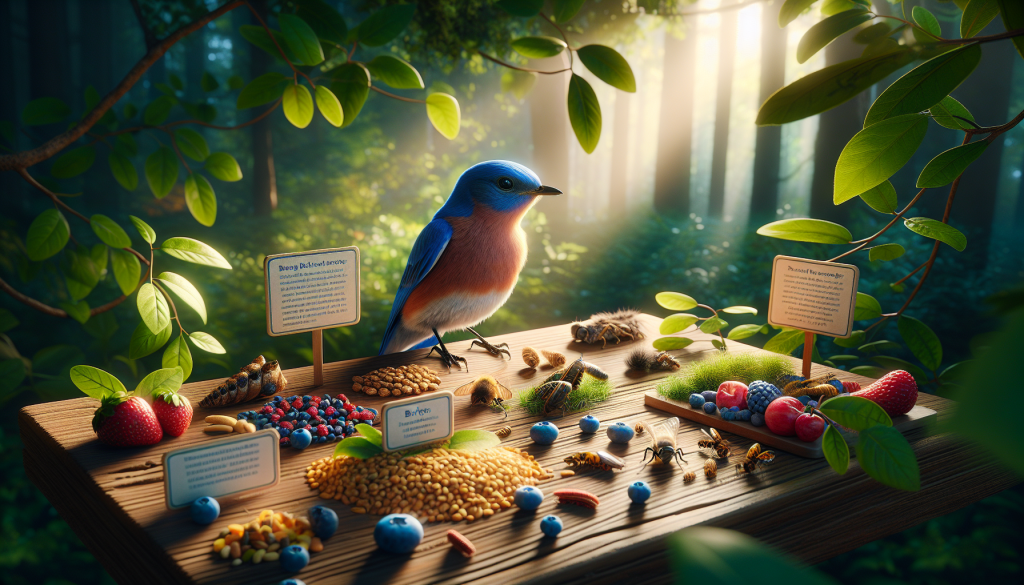
Eastern Bluebirds — a species well-known their vibrant, cerulean plumage and harmonious melodies. They have long been a cherished symbol of happiness and resilience. This enchanting species is predominantly found in North America, and its diet varies depending on the season. So, have you ever wondered what these delightful avians enjoy tucking into? Moreover, are our efforts to care for them doing more harm than good in terms of their diet? In this article, we will delve into the eating habits of the Eastern Bluebird and demystify whether mealworms are a safe or harmful provision.
The myriad dietary facets of Eastern Bluebirds
Remarkably adaptable, Eastern Bluebirds are not afraid to explore a wide range of foods, changing their menu based on what’s available during different seasons. For instance, in summer they prefer animal material, such as insects and spiders. Their notable choice includes beetles, caterpillars, grasshoppers, and snails. The latter proving an important source of the calcium necessary for females during egg-laying season.
Contrastingly, during the winter months, they shift their preferences towards a plant-based diet, seeking out berries, fruits, and seeds. Crucially, this change of diet sustains them when their beloved insects become scarce due to the cold weather.
Mealworms – A delightful treat or a dangerous indulgence?
Mealworms are often used to supplement the diet of Eastern Bluebirds, especially for backyard feeders in urban settings. But are they actually safe or are we unintentionally causing harm? Fortunately, mealworms are, in fact, safe for Eastern Bluebirds. These little wrigglers might not look appealing to us, but for bluebirds, they’re an absolute treat.
However, mealworms should not form the entirety of their diet. As bird lovers, we need to ensure we provide them with a balanced diet. For example, during spring and summer when insects are abundant, it may be best to cut back on your mealworm offerings, allowing Bluebirds to indulge in their natural food sources. Additionally, providing a variety of fresh, organic fruits can encourage dietary balance, particularly during the winter.
To enhance their calcium intake, you might consider providing crushed eggshells or oyster shells. Always remember, however, that these should be sterilized to avoid any potential transmission of pathogens.
Sustainability and consideration for the natural ecosystems of these birds should guide us. It’s imperative that we respect their dietary needs, which includes minimizing our disturbance of their natural feeding habits while offering a supplemental menu that adheres to their nutritional requirements.
The profound joy of watching these azure miracles flitting around and thriving in your backyard is unparalleled. And with the right dietary knowledge, we can contribute to their well-being and sustainability.
So, let’s consciously endeavour to encourage and sustain our local birdlife, appreciating their magnificent, inspiring presence in our lives. After all, our mindful actions today can ensure the soaring of blue beats in the skies of our future.

Emma Johnson is a passionate and insightful writer specializing in the house and garden niche, bringing over a decade of experience to her readers. At the youthful age of 34, Emma has already established herself as a leading voice in home improvement, landscaping, and interior design. Her journey began with a degree in Landscape Architecture from the University of Georgia, followed by years of hands-on experience working with renowned landscaping firms across the country.
Emma’s writing career took off when she started sharing her unique ideas and eco-friendly gardening tips on her personal blog. Her ability to blend practical advice with aesthetic design quickly garnered attention, leading to her current position as a featured columnist for a prominent online news site.
Dedicated to sustainable living and innovative design, Emma’s articles offer a wealth of knowledge, from DIY home projects to the latest trends in garden technology. Her work not only enlightens homeowners looking to enhance their living spaces but also inspires a deeper appreciation for the environment.
When she’s not writing or experimenting in her own garden, Emma enjoys mentoring young designers and participating in community beautification projects. Her contributions extend beyond her written work, embodying her commitment to making the world a more beautiful and sustainable place, one home at a time.


