
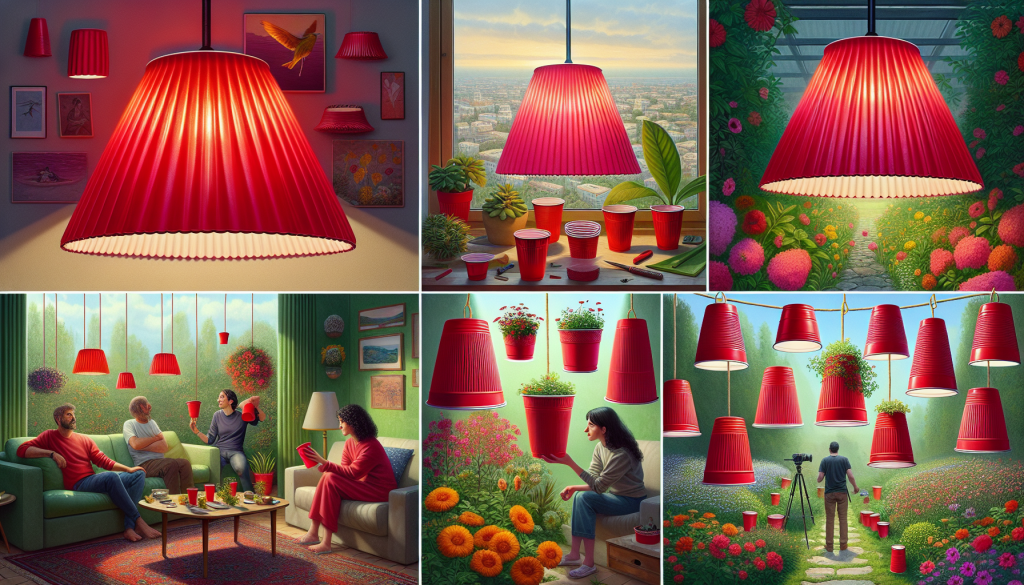
Often overlooked as merely a party item, the humble red plastic party cup actually holds considerable potential as a versatile tool for home and garden projects. This speaks volumes about the power of creativity and sustainability, as we find innovative uses for items commonly considered as waste. This article will explore some unexpected ways that red plastic party cups can be repurposed within your home and garden, drawing upon practical, eco-friendly, and innovative solutions.
Transforming cups into home accessories
Owing to their shape and size, red plastic party cups can be easily modified into functional and decorative home accessories. Perhaps one of the most straightforward ways is by converting a cup into a mini storage bin. By simply cutting off the top, it can serve as an organizer for small items such as office supplies, sewing materials, or even makeup tools. Thinking outside the box, you could also explore more creative ideas like turning them into custom lamp shades or using them as bases for DIY candle holders.
Creating an innovative lamp shade
For the lamp shade, you would need a string of LED lights, a drill, and several plastic cups. After drilling a hole at the bottom of each cup, thread the lights through the holes and arrange the cups in your desired shape and pattern. Voila! You now have a unique, customized lamp shade that didn’t cost you a fortune.
Design a DIY candle holder
To create a candle holder, all you need is a red plastic cup, a tealight candle, and a bit of clay. Put a small amount of clay at the bottom of the cup, and then simply press the candle into the clay to secure it. It’s a quick and quirky way to provide lighting during your outdoor gatherings.
Using cups as gardening tools
Red plastic party cups can also play a surprising role in your garden. They make affordable, reusable seedling pots. Just poke a few holes at the bottom for watering purposes, fill the cup with potting soil, and plant your seed. Not only does this practice give a second life to the cups, it also contributes to the sustainability of our planet by reducing waste.
Creating a bird feeder
If you want to keep your feathered friends happy, consider repurposing the cups into bird feeders. Simply punch two holes opposite each other near the lip of the cup. Thread a string through these holes to create a hanging loop. Fill the cup with bird seeds and hang it in your yard. You’ve then created a simple but effective bird feeder!
These are just a few suggestions on how red plastic party cups can be reincarnated as useful items around your home and garden. Who knew that such a commonplace item could bring so much functionality? These creative, sustainable ideas not only benefit us home dwellers, but also contribute to environmental conservation. Next time you have a few left over from your last party, instead of throwing them away, take a moment to think about how they could be reused. Remember, every little effort counts towards making our world a better place.

Emma Johnson is a passionate and insightful writer specializing in the house and garden niche, bringing over a decade of experience to her readers. At the youthful age of 34, Emma has already established herself as a leading voice in home improvement, landscaping, and interior design. Her journey began with a degree in Landscape Architecture from the University of Georgia, followed by years of hands-on experience working with renowned landscaping firms across the country.
Emma’s writing career took off when she started sharing her unique ideas and eco-friendly gardening tips on her personal blog. Her ability to blend practical advice with aesthetic design quickly garnered attention, leading to her current position as a featured columnist for a prominent online news site.
Dedicated to sustainable living and innovative design, Emma’s articles offer a wealth of knowledge, from DIY home projects to the latest trends in garden technology. Her work not only enlightens homeowners looking to enhance their living spaces but also inspires a deeper appreciation for the environment.
When she’s not writing or experimenting in her own garden, Emma enjoys mentoring young designers and participating in community beautification projects. Her contributions extend beyond her written work, embodying her commitment to making the world a more beautiful and sustainable place, one home at a time.


