
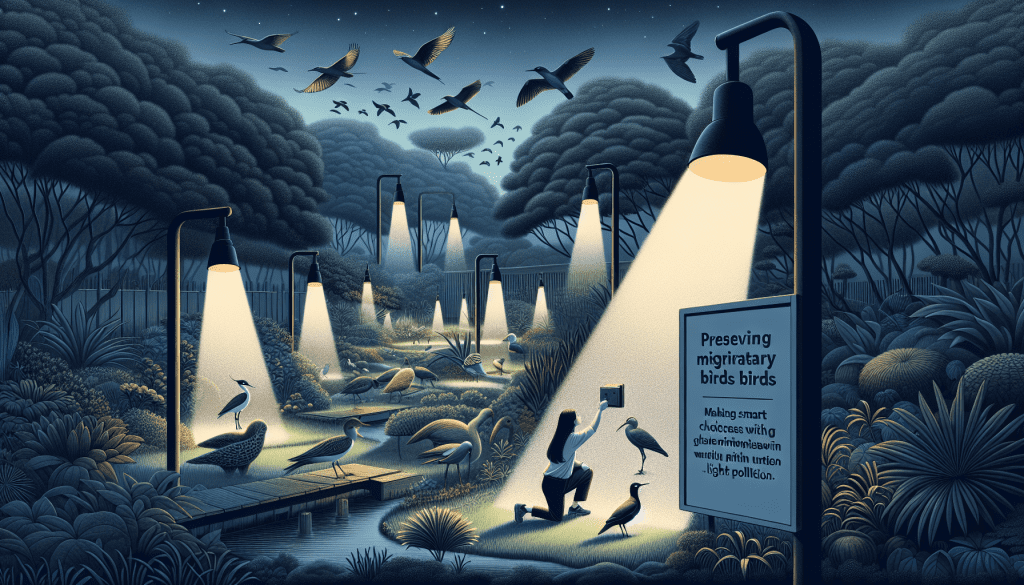
We’ve all been captivated by the melancholic chirping of migratory birds heralding the changing of seasons or brightening our day. These feathered friends hold an integral place in our biodiversity. Unfortunately, our modern infrastructure can act as a hazard to them, especially bright, outdoor lighting, which often confuses migratory birds. However, we can make smart choices to ensure the safety of birds while enjoying beautiful outdoor lighting at our homes.
Understanding the effect of light on migratory birds
Birds are remarkable creatures that demonstrate incredible navigation skills. They are known to use natural cues like the sun, stars, and even the earth’s magnetic field to find their way across thousands of miles during migration. Artificial lighting disrupts these cues, leading some birds to circle bright lights until they drop from exhaustion or crash against buildings.
Moreover, the alteration in the behavior of birds is not limited only to their navigation skills. Many birds are known to sing at unusual hours, thinking that dawn has arrived. Others are drawn to large cities and forget to continue their migration. This utilization of energy and time can have dramatic consequences on their population and breeding success.
Safe and stylish outdoor lighting options
While the problem is serious, the solution is simple and accessible. The idea is to opt for outdoor lighting options that offer sufficient illumination without posing a threat to migratory birds. Here are some promising suggestions:
Shielded Lighting
Shielded light fixtures are a great option as they prevent the light from spreading upwards and outwards, which are the primary areas that migratory birds would be flying. The light is directed downward towards the ground, illuminating only the necessary area and reducing light pollution in the process.
Smart Lighting
Smart lighting options come with motion sensors or timers that allow the lights to glow only when humans are present in the vicinity or during certain hours. This means the lights aren’t unnecessarily on all the time, reducing the overall impact on migratory birds.
Warm-colored Lighting
Instead of white or blue lights, opting for warm-colored lights like red or orange, which have less impact on birds, can be a smart choice.
Outage Hours
Most birds migrate at night, so it helps to establish “outage hours” for your outdoor lights. If everyone turns off their lights for few hours during peak migration times, the impact on birds is significantly reduced.
Implementing these modifications into your outdoor lighting system is not only an act of care towards our winged friends, but it’s also a step towards sustainability. Opting for smart and shielded lighting, for example, not only reduces light pollution but also energy consumption. It’s these ripple effects of conscious choices that can shape our environment for the better.
The decision to adopt bird-safe outdoor lighting is a commitment to being part of a community that values the planet’s incredible biodiversity. So, let’s light our paths innovatively, without dimming the way for our feathered friends. This is a small but important step towards building a world that celebrates coexistence, compassion, and sustainable innovation.

Emma Johnson is a passionate and insightful writer specializing in the house and garden niche, bringing over a decade of experience to her readers. At the youthful age of 34, Emma has already established herself as a leading voice in home improvement, landscaping, and interior design. Her journey began with a degree in Landscape Architecture from the University of Georgia, followed by years of hands-on experience working with renowned landscaping firms across the country.
Emma’s writing career took off when she started sharing her unique ideas and eco-friendly gardening tips on her personal blog. Her ability to blend practical advice with aesthetic design quickly garnered attention, leading to her current position as a featured columnist for a prominent online news site.
Dedicated to sustainable living and innovative design, Emma’s articles offer a wealth of knowledge, from DIY home projects to the latest trends in garden technology. Her work not only enlightens homeowners looking to enhance their living spaces but also inspires a deeper appreciation for the environment.
When she’s not writing or experimenting in her own garden, Emma enjoys mentoring young designers and participating in community beautification projects. Her contributions extend beyond her written work, embodying her commitment to making the world a more beautiful and sustainable place, one home at a time.


