
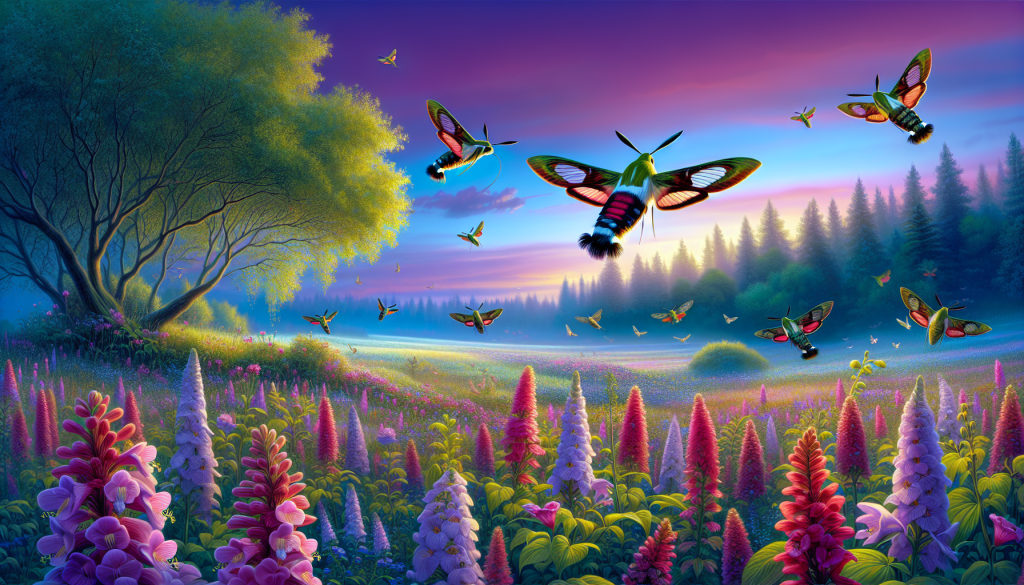
While we often associate pollination primarily with bees or butterflies, numerous creatures play a crucial role in maintaining our ecosystems. One such valuable pollinator is the hummingbird moth, an enchanting insect often mistaken for its namesake due to its iridescent coloring and distinctive flight pattern.
Characteristics of the hummingbird moth
Part of the Sphingidae family, the hummingbird moth is one of over 1,200 species of hawk moths. Unlike their daytime counterparts, hummingbird moths are crepuscular – they’re most active during the twilight hours of dusk and dawn. Their size, hovering behavior, and even their rapid wing beats, which produce a humming sound similar to that of a hummingbird, often lead to delightful mix-ups.
True connoisseurs of nature might notice the key differences separating these creatures. For instance, the hummingbird moth possesses a stout, furry body and long antennae, distinctively insect-like features. Their wings, spanning approximately two inches, are often transparent with a reddish-brown or olive-green tinge mimicking the iridescence of hummingbird feathers.
Role in our ecosystems
The hummingbird moth is a proficient and essential pollinator. Despite their nocturnal lifestyle, these moths play a crucial role in our ecosystems by pollinating flowers while they feed. Like many other pollinators, they stick their long proboscis into the centers of flowers to sip nectar, inadvertently collecting and redistributing pollen.
These creatures have a preference for fragrant, tubular flowers often blooming at night. It’s not uncommon to witness a hummingbird moth hovering around honeysuckles, verbena or primroses during a twilight garden stroll. Their activity aids in the reproduction and genetic diversity of these and various other plant species.
Conserving ethereal pollinators
With ongoing habitat loss and environmental change, it’s high time that we recognize and protect these lesser-known pollinators. Enhancing our gardens with native plants or reducing pesticide use can create a safe haven for these wonderous creatures, thus promoting biodiversity. Remember, every tiny creature contributes in a big way to the balance of our ecosystems.
We often overlook the remarkable creatures around us, their individual roles, and their collective importance. The hummingbird moth embodies an astonishing blend of beauty, vital functionality, and the power of pollination. After all, without these diligent pollinators, our vibrant horticultural landscapes would falter, and food production would be severely compromised.
The hummingbird moth serves as a reminder of the interconnected beauty of nature and the imperative of conservation. As you experience and learn more about these intriguing creatures, you not only cultivate your own, but also our collective reverence for nature. So next time you spot this captivating critter hovering in your garden, pause and appreciate it—not only for its ethereal beauty but also its role in our delicate ecosystems.

Emma Johnson is a passionate and insightful writer specializing in the house and garden niche, bringing over a decade of experience to her readers. At the youthful age of 34, Emma has already established herself as a leading voice in home improvement, landscaping, and interior design. Her journey began with a degree in Landscape Architecture from the University of Georgia, followed by years of hands-on experience working with renowned landscaping firms across the country.
Emma’s writing career took off when she started sharing her unique ideas and eco-friendly gardening tips on her personal blog. Her ability to blend practical advice with aesthetic design quickly garnered attention, leading to her current position as a featured columnist for a prominent online news site.
Dedicated to sustainable living and innovative design, Emma’s articles offer a wealth of knowledge, from DIY home projects to the latest trends in garden technology. Her work not only enlightens homeowners looking to enhance their living spaces but also inspires a deeper appreciation for the environment.
When she’s not writing or experimenting in her own garden, Emma enjoys mentoring young designers and participating in community beautification projects. Her contributions extend beyond her written work, embodying her commitment to making the world a more beautiful and sustainable place, one home at a time.


