
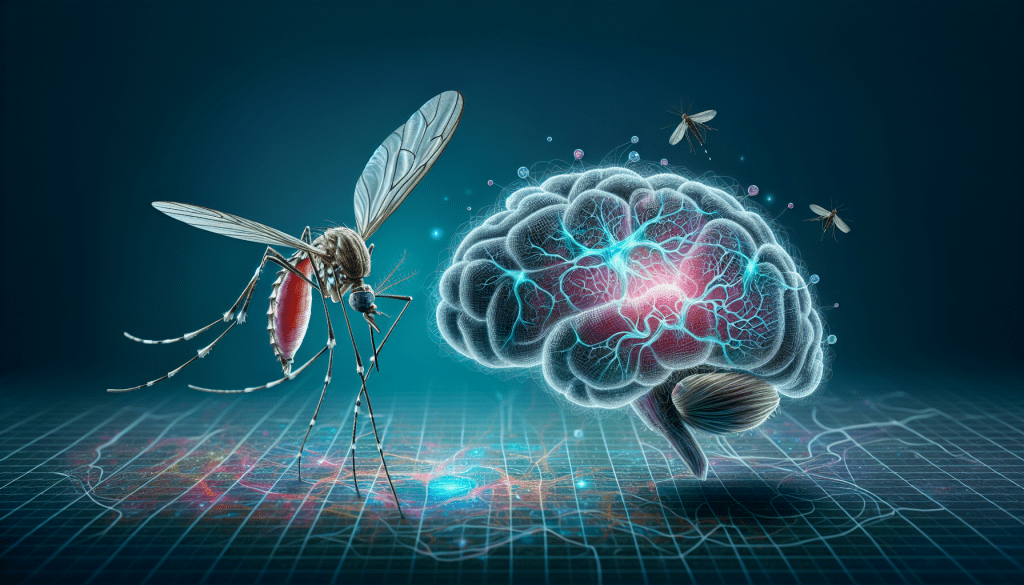
Among the most fascinating and diverse creatures on the planet are those seen as nuisances by most – the often misunderstood and underappreciated insects. Although they are usually seen as pests, a closer look reveals an intricate array of intriguing behaviours and amazing adaptations. Take, for example, the mosquito – a creature despised by many for its blood-sucking habits. Behind this vexing behaviour lies a mind-boggling biological process that highlights the wonder in even the smallest, most overlooked creatures.
Understanding the mosquito’s intriguing brain system
It’s far from common knowledge that mosquitoes have an incredible sense of orientation. Guided by their sense of smell and keen eyesight, mosquitoes navigate their environment with precision, easily finding their target – you! But what drives this extraordinary ability is the mosquito’s complex brain structure. Just like other insects, the mosquito’s brain is comprised of a series of interconnected neurons which control various functions. These neural networks operate in sync with their sensory organs to guide their behaviour and adapt to their surroundings.
The role of olfactory receptors in mosquito behaviour
A crucial part of the mosquito’s brain structure lies within its antenna – the olfactory receptors. These receptors are astonishingly sensitive, capable of detecting subtle changes in chemical concentrations in the air. They serve as a superior navigational tool, enabling mosquitoes to locate their next blood meal, often from great distances. Upon picking up the scent of a potential meal, the information is quickly processed and used to guide the mosquito toward its target.
Why do female mosquitoes bite?
Did you ever wonder why mosquitoes bite in the first place? It’s actually only the female mosquitoes that bite humans and other animals, drawing blood in order to acquire proteins necessary for the development of their eggs. This process is driven by a blood-seeking sensory system, which detects carbon dioxide released by animals, signalling a potential host. This system, combined with the mosquito’s superior olfactory abilities, makes for an efficient huntress, albeit annoying for us humans.
Although mosquitoes are often considered pests, understanding their intricate sensory and brain systems can highlight the intricate complexity of these small creatures. Who knew that behind the bothersome buzz lie such remarkable abilities?

Sophia Martinez is a dedicated and compassionate animal welfare advocate and writer, who has been enriching the lives of pet owners and animal enthusiasts for over 15 years. At 48 years old, Sophia’s expertise spans a wide range of topics, from pet care and nutrition to wildlife conservation and ethical animal treatment. She holds a Bachelor’s degree in Veterinary Science from Cornell University, which laid the foundation for her deep understanding of animal health and behavior.
Sophia’s career as a writer began after years of working in animal shelters and veterinary clinics, where she discovered her talent for communicating complex animal care concepts in an accessible and engaging manner. Her desire to make a difference in the lives of animals led her to become a prominent contributor to a well-known online news platform, where she now serves as the lead writer for the animal category.
Through her insightful and informative articles, Sophia aims to educate the public on responsible pet ownership, the importance of preserving natural habitats, and the latest advancements in animal health research. Her work not only highlights the joys and challenges of living with animals but also advocates for a more compassionate world where all creatures are respected and valued.
In addition to her writing, Sophia is an active volunteer with several non-profit organizations focused on animal rescue and habitat conservation. She often shares her personal experiences with fostering animals and participating in wildlife rehabilitation programs, further inspiring her readers to get involved in animal welfare causes.
Sophia’s passion for animals and her commitment to advocacy shine through in every piece she writes, making her a trusted and beloved figure among animal lovers worldwide.


